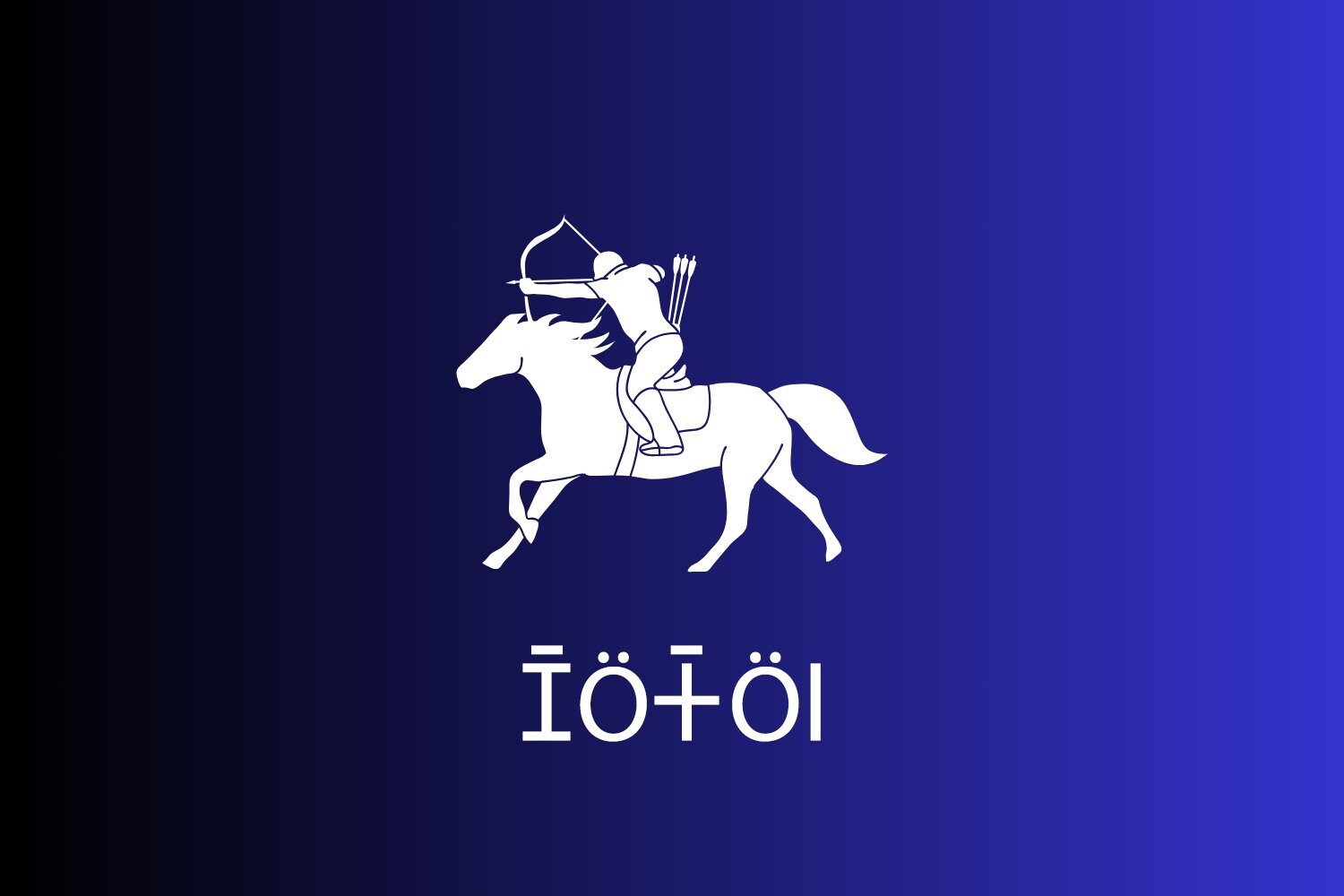
Flag of the Rouran Khaganate
This is my proposed flag of the Rouran Khaganate (330 – 552). Hear me out.
As is known, the Rouran never had an official "flag"; neither did the Göktürks or other steppe people in antiquity. Instead, banners with symbols that resembled ideas and were relevant to the collective dominant cultural group came into use. Thus, the Göktürks did indeed carry banners with drawings that showed a wolf's head (Tale of Asena). But what about their predecessors? How can we, if we want to depict them in texts, illustrations and videos, use a symbol of recognition?
Well. There is no information whatsoever that would point to a national animal or perhaps a mythological creature in the Rouran mentality. But the legendary Xianbei-slave-turned-warrior Mugulü, who is the one who founded the Rouran Empire, was a prime example of the Nöker system. He created the nation with the help of his Nökers: companions who swore allegiance to Mugulü due to his prowess and prestige in battle. By leaving behind their own tribal and perhaps ethnic affiliations, the Nöker joined his cause. It is very probable that the Rouran state was created out of pragmatism and opportunist ambitions. This would also explain the relatively heterogeneous nature of the Rouran subjects, notwithstanding the clearly Mongolic core dynasty, of course.
Then, it might be suitable to include two specific objects and gradient colors in this flag.
The first is a horse archer. The Rouran were, like the Göktürks and Xiongnu, equestrian nomads. This is a no-brainer. Nothing special, but it gets the point across.
Like the other steppe empires, the Rouran Khaganat was seated in the east of the steppe and set its eyes on the west. Therefore, the gradient colors are from right to left. It gets darker in the west because anything west of the Balkash in Central Asia was "undiscovered" territory for the Rouran.
The second object is a text. Written in the traditional Mongolian script, it spells Nökör, in Brahmi. We know that Brahmi was used among the Rouran, although the extent of the bureaucracy is unclear.